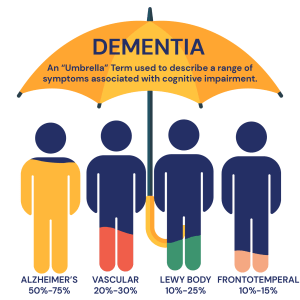
Many think dementia is a disease, but it is actually more complicated than that. Dementia is a term that encompasses a group of symptoms affecting memory, thinking, and social abilities. It’s not a specific disease but a general term that describes a wide range of symptoms. In this article, we delve deeper into the different types of dementia, each with its unique characteristics and challenges.
Alzheimer’s Disease: The Most Common Type
Alzheimer’s disease, the most widely recognized form of dementia, affects millions worldwide. It’s characterized by a gradual decline in cognitive functions, starting with mild memory loss and progressing to a complete inability to carry out daily activities. Alzheimer’s is marked by the accumulation of amyloid plaques and tau tangles in the brain, leading to the death of brain cells. Symptoms include memory loss, confusion, difficulty in completing familiar tasks, and changes in mood and behavior.
Vascular Dementia: When Blood Flow to the Brain is Compromised
Vascular dementia, the second most common type, results from conditions that block or reduce blood flow to the brain, depriving brain cells of vital oxygen and nutrients. Often occurring after a stroke, its symptoms can vary widely but typically include problems with planning, judgment, and memory. Early signs might include difficulty with organization, slower thinking, and trouble with complex tasks.
Lewy Body Dementia: A Disease with Mixed Symptoms
Lewy body dementia (LBD) is characterized by abnormal deposits of a protein called alpha-synuclein in the brain. These deposits, known as Lewy bodies, affect chemicals in the brain and can lead to problems with thinking, movement, behavior, and mood. LBD is closely related to Parkinson’s disease and shares many of its symptoms, including rigid muscles, slow movement, and tremors. Other symptoms include visual hallucinations, sleep disturbances, and fluctuating attention.
Frontotemporal Dementia: Affecting Personality and Language
Frontotemporal dementia (FTD), a group of disorders affecting the frontal and temporal lobes of the brain, typically manifests in changes in personality and behavior, and language problems. FTD tends to occur at a younger age compared to other dementias and progresses rapidly. Common symptoms include inappropriate social behavior, lack of empathy, repetitive compulsive behavior, and difficulties in speech and language.
Mixed Dementia: A Combination of Disorders
Mixed dementia is a condition in which brain changes of more than one type of dementia occur simultaneously. The most common combination is Alzheimer’s disease and vascular dementia. Symptoms can vary, combining characteristics of several types of dementia.
Conclusion
Each type of dementia presents its unique challenges and symptoms. Understanding these differences is crucial for diagnosis, management, and care planning. If you or a loved one is experiencing symptoms of dementia, it’s essential to consult with a healthcare professional for an accurate diagnosis and appropriate treatment plan. If you’re not sure whether the signs of dementia are present, you can use our quick test.
Early detection of dementia can significantly improve the quality of life for those affected. It allows for better management of symptoms, planning for future care, and, in some cases, slowing down the progression of the disease. If you or a loved one are experiencing memory difficulties or other changes in thinking skills, it is crucial to consult a healthcare provider for a thorough evaluation. Although there is currently no cure for most types of dementia, but there are treatments available that can help manage symptoms. Medications, lifestyle changes, and support from healthcare professionals and caregivers can all play a crucial role.